
"Haiti coffee growing"
500 article(s) found

Dominica's Honkalito coffee, Santo Domingo coffee flavor
Following Cafe Review (Wechat official account vdailycom) found that Beautiful Caf é opened a small shop of its own Dominica: Honkalito Coffee Honkalito Coffee comes from Tejada Manor in Haravakoa producing area at an altitude of 1150m to 1300m. This coffee garden is an old coffee garden with a history of a hundred years. It is always in the forefront of various cup test competitions, and it is the main grower.

A brief introduction to the market price of bright and sour Dominican boutique coffee beans
The earliest coffee in Dominica was introduced from Martinique (the overseas province of France), dating back to the early 18th century. Dominica is an island country with a tropical climate. The temperature changes little throughout the year. Except for the lower temperature in the Central Cordillera Mountains, which can reach less than 0 ℃ in winter, the annual average temperature in other areas is between 2530 ℃, which is affected by the mountain topography.

Description of Dominica Coffee Flavor with pleasant fragrance introduction of boutique coffee beans in producing areas
The earliest coffee in Dominica was introduced from Martinique (the overseas province of France), dating back to the early 18th century. Dominica is an island country with a tropical climate. The temperature changes little throughout the year. Except for the lower temperature in the Central Cordillera Mountains, which can reach less than 0 ℃ in winter, the annual average temperature in other areas is between 25 and 30 ℃, which is affected by the mountain topography.
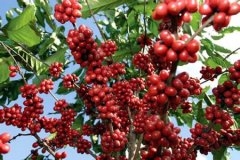
A brief introduction to the planting market price of Dominica boutique coffee beans with mellow taste
The earliest coffee in Dominica was introduced from Martinique (the overseas province of France), dating back to the early 18th century. Dominica is an island country with a tropical climate. The temperature changes little throughout the year. Except for the lower temperature in the Central Cordillera Mountains, which can reach less than 0 ℃ in winter, the annual average temperature in other areas is between 2530 ℃, which is affected by the mountain topography.

A brief introduction to the history and culture of the origin and development of Dominican boutique coffee beans
Turning to the introduction of Dominican coffee, the most distinctive features are fresh and elegant, full of particles, excellent acidity and pleasant flavor (two colleagues agree with this). Such flavor characteristics are not only related to the variety and the quality of the soil, but also closely related to the picking and handling of raw beans. Dominica's coffee is selected by the most expensive manual method, workers.
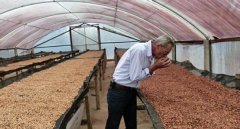
A brief introduction to the flavor, taste and aroma characteristics of Santo Domingo boutique coffee beans with intertwined aftertaste
The selection of Dominican coffee is usually done manually. The main basis for selection is according to the fullness of coffee particles, whether it is uniform, and then grade it. Generally speaking, coffee with full and uniform grains is easier to preserve. Only the fullest and most evenly grained coffee beans can be roasted to represent the best and finest coffee in the country. Unlike coffee produced in Haiti, Domi

A brief introduction to the description of taste and aroma characteristics of smooth and smooth Dominica boutique coffee beans
Turning to the introduction of Dominican coffee, the most distinctive features are fresh and elegant, full of particles, excellent acidity and pleasant flavor (two colleagues agree with this). Such flavor characteristics are not only related to the variety and the quality of the soil, but also closely related to the picking and handling of raw beans. Dominica's coffee is selected by the most expensive manual method, workers.

A brief introduction to the origin, development, history and culture of Dominica boutique coffee beans with mellow taste
The earliest coffee in Dominica was introduced from Martinique (the overseas province of France), dating back to the early 18th century. Dominica is an island country with a tropical climate. The temperature changes little throughout the year. Except for the lower temperature in the Central Cordillera Mountains, which can reach less than 0 ℃ in winter, the annual average temperature in other areas is between 2530 ℃, which is affected by the mountain topography.

A brief introduction to the description of flavor, taste and aroma characteristics of Dominican boutique coffee beans with excellent acidity
The name Dominica, which originally means Sunday, was taken by Columbus when he first came to America to discover it, because it happened to be a Sunday. This seemingly random name seems to be far-sighted today, because a good cup of coffee can bring people a relaxed and pleasant mood, which is why we are eager to bring us weekends after a busy week.

A brief introduction to the characteristics of Guatemalan coffee beans the origin of Guatemalan coffee beans
Coffee production in Guatemala has declined relatively, at 700kg per hectare, while that in El Salvador is 900kg per hectare and that in Costa Rica is even more astonishing, at 1700 kg per hectare. The export of dangerous Dimara coffee is controlled by private companies, but the National Coffee Council (Asociacion Nacional de Cafe) controls the coffee industry.

Brief introduction of planting Market Price of Dominica Fine Coffee Bean varieties with excellent acidity
The Dominican Republic has also experienced a history of unrest and poverty, and now the country has implemented democratic elections and entered a period of stable development, but it has not yet formally established diplomatic relations with China, but has maintained so-called diplomatic relations with Taiwan. It seems that this has nothing to do with coffee, but in fact, it still has an impact. The exchanges between the two countries that have not established diplomatic relations are subject to many restrictions in all aspects, and of course they will.

Jamaica Silver Mountain Coffee Estate Flavor Taste Blue Mountain Coffee Introduction
Only after passing through this series of stringent standards set by the Jamaica Coffee Industry Board can coffee receive a government certificate and officially bear the name Blue Mountain. Coffee first appeared on the island of Jamaica in 1728 from Latin America's Haiti. By 1790, refugees from Haiti included coffee farmers who settled in the Blue Mountains and planted coffee seeds

A brief introduction to the planting market price of smooth and smooth Dominican boutique coffee beans
Dominica is an island country with a tropical climate, with little change in temperature throughout the year. Except for the lower temperature in the Central Cordillera Mountains, which can reach less than 0 ℃ in winter, the average annual temperature in other areas is between 25 and 30 ℃, while affected by the mountain topography, the north and east face the northeast trade wind, with an annual precipitation of 1500-2500 mm, which belongs to a tropical marine climate.

A brief introduction to the treatment method of grinding degree and baking degree of Santo Domingo boutique coffee beans with winding aftertaste
The earliest coffee in Dominica was introduced from Martinique (the overseas province of France), dating back to the early 18th century. Dominica is an island country with a tropical climate. The temperature changes little throughout the year. Except for the lower temperature in the Central Cordillera Mountains, which can reach less than 0 ℃ in winter, the annual average temperature in other areas is between 2530 ℃, which is affected by the mountain topography.

Santo Domingo, Dominican Republic Coffee Varieties Producing Areas Flavors Taste Characteristics Boutique Coffee Introduction
In 1677, about 4,000 French lived in eleven villages in the western part of the island. In 1697, France and Spain ceded the western part of the island to France under the Treaty of Leswick of the Great Alliance War, officially recognizing French sovereignty over Haiti in the west of the Spanish island, and calling the eastern part of the Spanish island Santo Domingo. France on Hispaniola continues to develop an agricultural economy

A brief introduction to the cultivation of bright sour boutique coffee beans in Dominica, geographical location, climate and altitude
The Dominican Republic has also experienced a history of unrest and poverty, and now the country has implemented democratic elections and entered a period of stable development, but it has not yet formally established diplomatic relations with China, but has maintained so-called diplomatic relations with Taiwan. It seems that this has nothing to do with coffee, but in fact, it still has an impact. The exchanges between the two countries that have not established diplomatic relations are subject to many restrictions in all aspects, and of course they will.

Planting situation of excellent acidity boutique coffee beans in Dominica A brief introduction to geographical location, climate and altitude
The Dominican Republic has also experienced a history of unrest and poverty, and now the country has implemented democratic elections and entered a period of stable development, but it has not yet formally established diplomatic relations with China, but has maintained so-called diplomatic relations with Taiwan. It seems that this has nothing to do with coffee, but in fact, it still has an impact. The exchanges between the two countries that have not established diplomatic relations are subject to many restrictions in all aspects, and of course they will.

Fragrant Jamaican Coffee Flavor introduction to Cliff Manor Jamaican Coffee
The earliest coffee on the island of Jamaica came from Haiti in Latin America in 1728. By 1790, some coffee farmers among the refugees in exile from Haiti had settled in the Blue Mountains and brought coffee-growing technology here. In 1838, Jamaica abolished slavery and allowed liberated slaves to cultivate their own land. Free slaves moved to the mountains to specialize in planting.

Introduction to the taste of the fresh, elegant and full-grained boutique coffee manor in Dominica
After Santo Domingo returned to Spanish rule, the local people gradually formed a consensus on independent statehood. On November 30th, 1821, the former Governor of Santo Domingo, General Jos Nez de Cceres, proclaimed the founding of the country, named Haiti, Spain, and expected to merge under the Greater Colombian State led by President Bolivar of South America. [3] but in February 1822, nine weeks later, Haiti's

Introduction to Cuban Crystal Coffee Plantation
The earliest archaeological landscape of coffee plantations in southeastern Cuba, located in the Maestra Mountains in southeastern Cuba, was a coffee-growing area in southeastern Cuba in the 19th and early 20th centuries. Mount Maestra averages 1500 meters above sea level, straddling Guantanamo and San Diego